
Dry Needling & Acupuncture for mobility and & pain relief
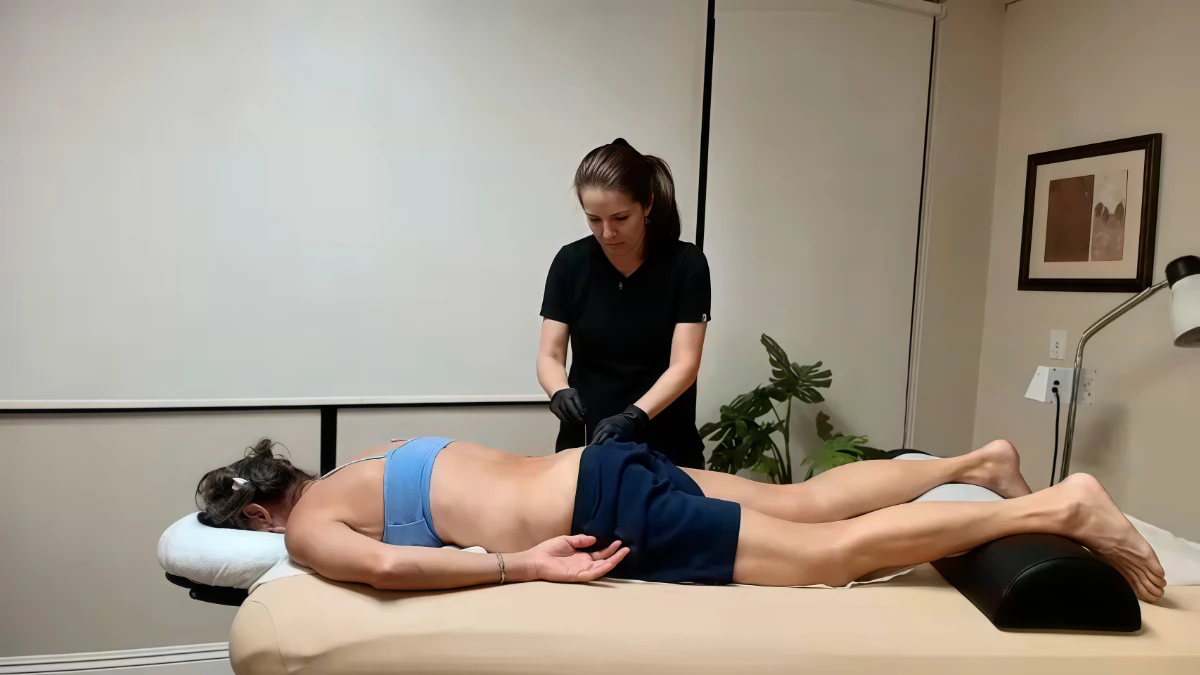
What can Dry-Needling with Tui-Na Help you with?
Low back pain
Sciatica
Arthritis
Bursitis
Tendonitis
Knee pain
Foot pain
Ankle pain
Elbow pain
Wrist pain
Carpel Tunnel Syndrome
Neck pain
Shoulder pain
Frozen shoulder
Sports injuries
PMS and menstrual cramps, endometriosis, pelvic floor health
Our Treatment Process
Treatment Plans
The Radiant Core Ritual
$295 per session
90 min
Radiant Facial Acupuncture
$180 per session
Pelvic Vitality Session
$150 per session
Digestive Harmony Treatment
Approx. 60 minutes
Pain Relief & Body Balancing
- Ideal for concerns such as low back pain, hip pain, Musculo-skeletal conditions, shoulder pain, neck pain, sciatica, headaches, joint discomfort.
- Treatment aims to restore function
- Release restrictions
- Calm the nervous system
- Reduce pain
- Speed recovery
- + Manual therapy (Tui-Na)-Maximize results
- Whole-body healing, nervous system regulation, and functional restoration. It’s not a quick fix—it’s a transformative process. For skin conditions, anxiety, insomnia, or emotional stress. To help you look and feel revitalized from the inside out.
Herbal Formula (100g)
Additional – $45
- Packages available to save, promote commitment, and to streamline your visits.
- Best results are achieved by following the treatment plans with timely treatments.
- The effectiveness of this treatment procedure cannot be guaranteed.
- Any additional history of trauma, infection, inflammation or surgery could change your suggested number of treatments.
Booking Your Session
Your questionnaire link will be emailed to you once your first session is booked.
You will be enter your information in our secure HIPPA compliant patient management and booking system.
Book a follow-up session to continue your care. These visits typically last **30 to 45 minutes**.
**Specialized Sessions**
**Facial Rejuvenation Acupuncture** – about **1 hour**
**Pelvic Floor Care** – about **1 hour** (never internal and guided by your comfort level)
What’s Included in Your Dry Needling & Acupuncture Sessions
- Exstore Orthopedic Assessment Specialized one-on-one evaluation to identify what’s working, what’s not, and where your body needs support—based on muscle function and movement patterns.
- Pelvic Floor Dry Needling (External Only) For those needing pelvic floor care, this gentle and precise approach helps release tension, improve function, and restore confidence in core stability.
- Trigger Point Release Targeted dry needling to deactivate painful muscle knots and restore natural movement.
- Electro-Acupuncture Microcurrent or milliamphere stimulation to enhance nervous system regulation, reduce pain, and accelerate healing.
- Fascia Adhesion Release Techniques to loosen tight, shortened muscles and improve joint mobility and circulation.
- Manual Therapies as Needed Including Tui-Na massage and Gua Sha to release scar tissue, improve lymph flow, and reduce inflammation.
- Personalized Exercises Movement-based strategies to reinforce treatment effects, improve posture, and support long-term recovery.
- Customized Treatment Plan Co-created with you to determine the ideal number and frequency of visits for lasting results.
Dry Needling FAQ’s
Assessment of Musculoskeletal and Pelvic floor conditions
- We use the Exstore System to find areas of muscle motor inhibition causing weakness and pain, and test specific muscles to treat the underlying cause of injury and pain.
- Palpation of muscles, joints, or abdomen.
- To assess range of motion restrictions.
- To assess muscle imbalances
- To assess stabilizing muscle inhibitions.
Assessment of Internal Medicine, and Gut health
- We form a pattern diagnosis based on your signs and symptoms
- Pulse Diagnosis
- Tongue Diagnosis
- Abdominal palpation
- Symptoms or health complaints
What is Pattern Diagnosis in Acupuncture Medicine?
First, Understanding Meridian-Organ Systems
In TCM, the body is viewed as an interconnected system of meridians, which are energy pathways connecting organs and glands. Each meridian is associated with a specific organ-gland system. Each has its own set of functions and characteristics. They have an influence on our emotions, temperament, and constitutional traits as well as body substances like blood, lymph, water, and fluids. The main meridian-organ pairs include:
- Lung and Large Intestine
- Spleen and Stomach
- Heart and Small Intestine
- Kidney and Bladder
- Liver and Gallbladder
- Pericardium and Triple Burner
Pattern Diagnosis
Pattern diagnosis involves assessing the patient’s symptoms and signs to identify a specific set of characteristics indicating an imbalance within these meridian-organ systems. This process includes several diagnostic methods:
- Observation: Examining the patient’s physical appearance, including the tongue, skin, and overall demeanor.
- Listening and Smelling: Noting any unusual sounds (such as coughing) and odors.
- Inquiry: Asking detailed questions about the patient’s symptoms, lifestyle, and medical history.
- Palpation: Feeling the pulse and palpating specific areas of the body to detect abnormalities.
Common Patterns
Some common patterns of disharmony include:
- Qi Deficiency: Characterized by fatigue, shortness of breath, and a weak pulse. Often associated with the Spleen or Lung meridians.
- Blood Stasis: Symptoms include sharp pain, dark or purplish discoloration, and a choppy pulse. This can affect various meridians, including the Liver and Heart.
- Yin Deficiency: Marked by symptoms such as night sweats, dry mouth, and a thin pulse. Commonly involves the Kidney or Heart meridians.
- Yang Deficiency: Includes cold extremities, a pale complexion, and a deep, weak pulse. Often related to the Kidney or Spleen meridians.
- Heat: Symptoms include fever, red face, and a rapid pulse. This can be due to excess heat in the Heart or Liver meridians.
Treatment
Once a pattern is identified, treatment involves using acupuncture, herbal medicine, dietary recommendations, and lifestyle changes to restore balance within the meridian-organ systems. Acupuncture points are selected based on their ability to regulate the flow of Qi and blood, tonify deficiencies, clear excesses, and harmonize the body’s energies.
What is Qi (pronounced Chee)?
Qi has many different meanings. At its core, it means function of our body systems, and health of body substances like blood, hormones, and fluids.
What Is Qi? A Science-Informed View of Acupuncture’s Vital Force
In Traditional Chinese Medicine (TCM), is often described as “life force” or “vital energy.” But what does that really mean in modern, scientific terms?
Think of Qi as a **dynamic system of biological signals**—a blend of **electrical, biochemical, and mechanical activity** that keeps your body functioning and communicating.
Qi as Biological Communication
- **Electrical impulses**: Your nervous system sends signals through neurons—tiny electrical currents that help regulate pain, movement, and organ function.
- **Biochemical messengers**: Hormones, neurotransmitters, and immune signals circulate to maintain balance and respond to stress.
- **Mechanical tension**: Fascia, muscles, and connective tissue transmit subtle mechanical forces that influence posture, circulation, and organ health.
Qi is the **sum of these interactions**, flowing through pathways called **meridians**—which may correspond to fascial planes, nerve bundles, or vascular routes. When Qi flows smoothly, your body is in harmony. When it’s blocked or deficient, symptoms arise.
How Acupuncture Influences Qi
Acupuncture stimulates specific points to:
- **Modulate nervous system activity** (e.g., reduce pain, calm stress)
- **Improve circulation and lymphatic flow**
- **Restore balance in organ systems** by influencing local and systemic responses
Some researchers describe Qi as a form of **biofield energy**—a measurable electromagnetic field generated by living systems. Others see it as a metaphor for **homeostasis**, the body’s ability to self-regulate and heal.
A Patient-Friendly Analogy
“Qi is like your body’s Wi-Fi signal. It carries messages between your organs, muscles, and brain. When the signal is strong and clear, everything works smoothly. When it’s weak or blocked, symptoms show up. Acupuncture helps reboot and strengthen that signal so your body can heal itself.”
What is Dry Needling Vs. Acupuncture Needling?
Both use the same thin, sterile acupuncture needles—but the intention and technique are different.
Dry Needling targets myofascial trigger points and muscle dysfunction. It’s often used for orthopedic and pelvic floor conditions to release tension, improve muscle activation, and restore movement. It’s guided by a physical assessment and is always external in pelvic care.
Acupuncture is rooted in Traditional Chinese Medicine (TCM). It works with the body’s energy pathways (meridians) to restore internal balance, support organ function, and promote whole-body healing. It is great for internal medicine, gynecology, immune function, respiratory, cardiovascular, gastrointestinal as well as pain relief.
In my Radiant Core Method, I often blend both—using dry needling for precision muscle release and acupuncture for deeper energetic harmony. Together, they offer a powerful path to healing from the inside out.
- We accept: Health savings account (HSA), Flexible spending account (FSA). 💫 A Note About Insurance
- To support The Radiant Core method, we choose not to work directly with insurance—and that’s intentional. It allows us to focus fully on your healing, rather than what insurance will or won’t approve.
- You pay at the time of service
- We provide a **superbill** (a special receipt) you can submit for potential reimbursement
- What you receive back depends on your individual insurance plan
- No waitlists or gatekeeping
- You choose your provider—not your insurance
- No surprise bills or confusing co-pays
- Treatment guided by your body’s needs—not insurance limitations
(Insurance plans do not cover dry needling or trigger point therapy)
*We pride ourselves on our dedication to continued growth and development of our specialty programs. We aim to provide you with the best possible care. Each case is unique; thus, we develop a treatment plan that works best for you!